IMDC-IST 2026

December 2026 · Ibra, Oman

Beyond Green
Intelligent Systems

From Digital Sustainability to Responsible Agentic AI

5th International Multi-Disciplinary Conference on Integrated Sciences and Technologies · IMDC-IST 2026

6 Research Tracks
6 Keynote Speakers
Springer Publication · Scopus
Int'l Multi-disciplinary
Scroll

Rethinking AI Through the Lens of Digital Sustainability

The main aim of IMDC-IST 2026 is to provide an international forum for academics, researchers, practitioners, and technology developers from both academia and industry to present their latest research, exchange knowledge, and identify the practical implications of emerging technologies for global impact. Building on the momentum of the Fourth Industrial Revolution and its influence on innovation, sustainability, and digital transformation, IMDC-IST 2026 seeks to deepen understanding of how emerging technologies are reshaping individuals, organizations, industries, and societies. In particular, the conference focuses on the growing role of agentic AI and intelligent systems in transforming decision-making, innovation processes, work practices, governance models, and social life.

When Microsoft shared that their water usage had increased 34% with the release of OpenAI, we were struck by the potential impact that could have, particularly for those of us living in the desert. The environmental impacts of agentic AI have raised concerns about the hidden costs of environmental innovation — increased energy and water consumption. For communities in water-scarce and climate-sensitive regions such as the Arabian Gulf and other desert environments, these concerns are directly linked to sustainable development, resource security, and long-term social well-being. While agentic AI offers tremendous opportunities in education, business, services, health, space, and discovery, their widespread adoption raises questions about energy, privacy, trustworthiness, inequality, and social resilience.

A comprehensive sustainability agenda must include different perspectives — the interrelated impacts on people, profits, and the planet — incorporating environmental, social, and governance elements. Responsible agentic AI encompasses systems that simultaneously promote prosperity, climate consciousness, social equality, and individual well-being. It refers to AI systems that are not only autonomous and goal-oriented, but also designed, deployed, and governed with foresight, accountability, transparency, and concern for unintended consequences.

IMDC-IST 2026 invites researchers to rethink the future of intelligent and agentic technologies through the lens of digital sustainability and responsible innovation. The conference encourages theoretical, empirical, and applied contributions that explore how agentic AI can support sustainable organizations, climate-conscious innovation, ethical digital transformation, social inclusion, human well-being, and trustworthy governance.


📗
Springer LNNS Series  ·  Accepted papers published in Lecture Notes in Networks and Systems — Indexed in Scopus
6
Conference Tracks
30+
Scientific Committee
5th
Annual Edition
Published & Indexed by
Scopus
Springer

Responsible Agentic AI & Digital Sustainability

🔬 Key Research Areas

Green AI & sustainable computing infrastructure
Responsible agentic AI systems and governance
Digital sustainability metrics & ethics
Climate-conscious innovation & resource efficiency
Social inclusion, equity & human well-being
Trustworthy governance & transparency

🌍 Sustainability Dimensions

Environmental sustainability — Planet-first design
Economic impact — Responsible profit models
Social equity — People-centered outcomes
ESG frameworks & corporate accountability
Auditability, traceability & provenance
Autonomous goal-oriented system oversight

Conference Tracks

Six multidisciplinary tracks spanning the full spectrum of responsible agentic AI research and application.

Track 01

Agentic AI Architectures, Multi-Agent Systems & Autonomous Networks

  • Architectures for agentic AI and autonomous intelligent systems
  • Multi-agent coordination, communication, and collaboration protocols
  • Planning, reasoning, externalized memory, and tool use in AI agents
  • Agentic AI for distributed, decentralized, and networked systems
  • Agent interoperability, composability, and cross-system integration
  • Evaluation, benchmarking, and validation of autonomous AI agents
  • Adaptive learning, scalability, and self-correction in agentic systems
Track 02

Responsible, Secure & Trustworthy Agentic AI Systems

  • Safety, reliability, and fail-safe mechanisms for AI agents
  • Explainability, transparency, and trust calibration
  • Cybersecurity, adversarial risks, and resilience in multi-agent systems
  • Human oversight, control, intervention, and escalation mechanisms
  • Auditability, traceability, provenance, and accountability of agent actions
  • Risk assessment, verification, and validation of agentic AI
  • Ethical, legal, and regulatory challenges in autonomous intelligent systems
Track 03

Green AI, Digital Sustainability & Sustainable Computing

  • Green AI and energy-efficient machine learning
  • Sustainable computing and low-carbon AI infrastructure
  • Carbon-aware cloud, edge, and distributed computing
  • Resource-efficient algorithms, model compression, and frugal AI
  • Environmental impact assessment of generative and agentic AI
  • AI agents for energy optimization and resource management
  • Digital sustainability metrics, lifecycle assessment, and responsible computing
Track 04

Agentic AI for Cyber-Physical Systems, IoT & Smart Infrastructure

  • Agentic AI in cyber-physical systems
  • AI agents for IoT, sensor networks, and autonomous sensing
  • Smart grids and intelligent energy systems
  • Digital twins for sustainable infrastructure and system simulation
  • Intelligent transportation, connected vehicles, and mobility systems
  • Agentic AI for robotics, automation, and Industry 5.0
  • Edge intelligence and real-time control in autonomous systems
  • Resilient infrastructure and climate-adaptive technologies
Track 05

Agentic Entrepreneurship, Business Innovation & Intelligent Decision Systems

  • Entrepreneur–AI co-agency in opportunity discovery and venture ideation
  • Agentic venture design, AI-as-a-Service, and autonomous micro-firms
  • AI agents for strategic planning, funding, scaling, and business pivoting
  • Intelligent decision support for entrepreneurial and organizational systems
  • Predictive analytics, simulation, and optimization for complex venture systems
  • Intelligent supply chains, circular economy networks, and sustainable operations
  • ESG analytics, sustainability performance, and responsible business intelligence
  • Human–AI workflow orchestration, decision handoff, and agent supervision
Track 06

Responsible Agentic AI in Smart Societies & Sustainable Development

  • Agentic AI for smart cities and urban systems
  • AI agents for digital government and public service delivery
  • Intelligent systems for education, AI literacy, and future skills
  • AI-enabled healthcare, well-being, and social support systems
  • Agentic AI for climate resilience and environmental monitoring
  • Human–AI collaboration, digital inclusion, and sustainable societies
  • Responsible AI adoption and innovation in emerging economies
  • Data governance, interoperability standards, and socio-technical ecosystems

Keynote Speakers

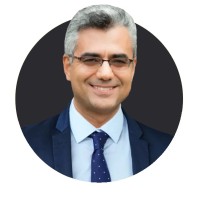
Prof. Dr. Jun Li
Prof. Dr. Jun Li
SP Jain London School of Management, United Kingdom
Editor-in-Chief of the Journal of Entrepreneurship in Emerging Economies (Emerald).
Prof. Dr. Marina Dabić
University of Ljubljana, Slovenia
Editor-in-Chief of Technology in Society (ScienceDirect).
Prof. Dr. Catherine Prentice
University of Southern Queensland — Springfield Campus, Springfield, 4300, Australia
Co-Editor of Journal of Retailing and Consumer Services (ScienceDirect) and Editor-in-Chief of Strategic Business Research (ScienceDirect).
Prof. Dr. Saeed Pahlevansharif
Taylor's University, Malaysia
Editor-in-Chief of Asia-Pacific Journal of Business Administration (Emerald).
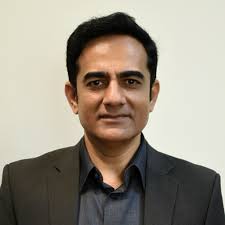
Dr. Navaz Naghavi
Dr. Navaz Naghavi
Flinders University, Australia
Editorial Assistant of Asia-Pacific Journal of Business Administration (Emerald).
Prof. Dr. Mumtaz Ali Memon
SDU University, Kazakhstan
Managing Editor of Journal of Applied Structural Equation Modeling.

Important Dates

EventDate
Full Paper Submission Deadline October 20, 2026
Notification of Acceptance / Rejection October 25, 2026
Final Paper (Camera Ready) Submission October 30, 2026
Final Draft for Publication November 10, 2026
Conference Dates December 2026

Publication & Presenter Fees

Conference Registration Fees

Covers publication, presentation, and participation materials

🌍
International Participants
200 USD
🇴🇲
Local Participants
100 USD
  Proceed to Payment Portal

Template & Call for Papers

📄

Conference Template

Download the official Springer LNNS paper template. All submissions must follow the provided formatting guidelines to be considered for review and publication.

Download Template
📬

Call for Papers

We invite theoretical, empirical, and applied contributions addressing responsible agentic AI and digital sustainability. All accepted papers undergo rigorous peer review by the international scientific committee.

Submit Your Paper

Venue & Contact

Conference Venue

College of Business Administration (COBA)

A'Sharqiyah University (ASU)
Ibra, Sultanate of Oman

Publication Details

Springer LNNS Series
Scopus Indexed
International Reach

All accepted papers will be published by Springer in the Lecture Notes in Networks and Systems (LNNS) series, a prestigious international publication venue for conference proceedings in engineering and applied sciences.

The LNNS series is indexed in Scopus, ensuring maximum visibility and academic impact for your research contributions.

Conference History

2024
3rd IMDC-IST 2024 — Springer Proceedings https://link.springer.com/book/10.1007/978-3-031-51716-7
2025
4th IMDC-IST 2025 — Springer Proceedings https://link.springer.com/book/10.1007/978-3-032-15806-2
2026
5th IMDC-IST 2026 — Upcoming · Beyond Green Intelligent Systems A'Sharqiyah University, Ibra, Oman · December 2026

Conference Boards

👑

Conference General Chairs

Professor Dr. Yahya Alwahibi Chancellor, A'Sharqiyah University, Oman
🎖️

Honorary Conference Chair

Dr. Ibrahim Sultan Ali Al Harthi Deputy Vice Chancellor for Academic Affairs and Research, A'Sharqiyah University, Oman
⚙️

Conference Organizing Chair

Dr. Mohammad Al Rashdi College of Business Administration, A'Sharqiyah University, Ibra, Oman
🎓

Program Committee Chair

Prof. Dr. Gül Erkol Bayram Sinop University, School of Tourism and Hospitality Management, Department of Tour Guiding, Sinop, Turkey
📚

Publication Committee Chairs

Prof. Dr. Victor TiberiusUniversity of Potsdam, Potsdam, Germany
Dr. Alhamzah Al Sayed NoorA'Sharqiyah University, Ibra, Oman
Prof. Dr. Marco ValeriNiccolo' Cusano University, Rome, Italy
Dr. Khalid DahleezCollege of Business Administration, A'Sharqiyah University, Ibra, Oman
Dr. Mohammed Salah AlazzawiCollege of Business Administration, A'Sharqiyah University, Ibra, Oman
🗂️

Conference Tracks Chairs

Dr. Mohammad Al RashdiCollege of Business Administration, A'Sharqiyah University, Oman
Dr. Abdul Hakim Hassan Mustafa MohamedAssociate Professor, Senior IEEE Member, A'Sharqiyah University, Oman
Dr. Sammar AbbasCollege of Business & Entrepreneurship, Abdullah Al Salem University, Kuwait & Kohat University of Science and Technology, Pakistan
Dr. Yousif Raad MuhsenCollege of Computer Science and IT, University of Wasit, Iraq
Dr. Mohamed BashirCollege of Business Administration, A'Sharqiyah University, Ibra, Oman
Dr. Faozi Al-MaqtariCollege of Business Administration, A'Sharqiyah University, Ibra, Oman
Dr. Mohammad SalahCollege of Business Administration, A'Sharqiyah University, Ibra, Oman

Organizing & Scientific Committees

Conference Scientific Committee

Dr. Alhamzah Al Sayed NoorA'Sharqiyah University, Ibra, Oman
Dr. Faozi AlmaqtariA'Sharqiyah University, Ibra, Oman
Dr. Hamood Al-HattamiA'Sharqiyah University, Ibra, Oman
Dr. Abdelsalam AdamA'Sharqiyah University, Ibra, Oman
Dr. Mohammad SalahA'Sharqiyah University, Ibra, Oman
Dr. Tarek ChebbiA'Sharqiyah University, Ibra, Oman
Dr. Nashat Ali AlmasriaA'Sharqiyah University, Ibra, Oman
Dr. Khalid MadyA'Sharqiyah University, Ibra, Oman
Dr. Ayman IsmaeilRecords and Archives Management, A'Sharqiyah University, Oman
Dr. Mohamed SalaheldeenA'Sharqiyah University, Ibra, Oman
Dr. Abdulhadi IbrahimA'Sharqiyah University, Ibra, Oman
Dr. Ramzi SallemA'Sharqiyah University, Ibra, Oman
Dr. Abdul Hakim Hassan Mustafa MohamedA'Sharqiyah University, Ibra, Oman
Dr. Elias ShahdaA'Sharqiyah University, Ibra, Oman
Dr. Hayel Abd El Mawla TashtoushA'Sharqiyah University, Ibra, Oman
Dr. Yasir MohamedA'Sharqiyah University, Ibra, Oman
Dr. Mohammad Al RashdiA'Sharqiyah University, Ibra, Oman
Dr. Amur Sultan Amur AL HajriA'Sharqiyah University, Ibra, Oman
Dr. Tarek OuerfelliA'Sharqiyah University, Ibra, Oman
Dr. Senthilkumar MoorthyA'Sharqiyah University, Ibra, Oman
Dr. Fadi AbdelfattahModern College of Business and Science, Muscat, Oman
Dr. Saif Ali Abd Alradha AlsaidiWasit University, Iraq
Dr. Yousif Raad MuhsenWasit University, Iraq
Dr. Abdul Hadi M. AlaidiWasit University, Iraq
Dr. Esraa Saleh AlomariCollege of Education for Pure Sciences, Wasit University
Dr. Nor Aida Abdul RahmanUniversiti Kuala Lumpur
Dr. Siraj Razooqi AbbasWasit University, Iraq
Dr. Nadeem Abdulmalik Abdulrahman AljonaidQilu Institute of Technology, School of Business, Jinan, China
Dr. Arman KhanShaheed Benazir Bhutto University, Pakistan
Dr. Mohammed Ali Said Bait Ali SulaimanDepartment of Marketing and Entrepreneurship, Dhofar University, Oman
Dr. Mohammed JaboobCollege of Commerce and Business Administration, Dhofar University, Oman
Dr. Yuvaraj GanesanGraduate School of Business, Universiti Sains Malaysia, Penang, Malaysia

Organizing Committee

Dr. Mohammad Al RashdiCollege of Business Administration, A'Sharqiyah University, Ibra, Oman
Dr. Saleh Al SinawiAssistant Dean, Associate Professor, A'Sharqiyah University, Oman
Dr. Abdul Hakim Hassan Mustafa MohamedAssociate Professor, Senior IEEE Member, A'Sharqiyah University, Oman
Dr. Faozi Al-MaqtariAssistant Professor, College of Business Administration, A'Sharqiyah University, Oman
Dr. Ayman IsmaeilRecords and Archives Management, A'Sharqiyah University, Ibra, Oman
Dr. Tarek OuerfelliCollege of Business Administration, A'Sharqiyah University, Ibra, Oman
Dr. Alhamzah Al Sayed NoorCollege of Business Administration, A'Sharqiyah University, Ibra, Oman
Dr. Mohammed SalahCollege of Business Administration, A'Sharqiyah University, Ibra, Oman
Professor Abdullah Al BadiChair of IEEE Oman Section; College of Engineering, Sultan Qaboos University, Oman
Dr. Tarek ChebbiCollege of Business Administration, A'Sharqiyah University, Ibra, Oman
Ms. Raya Al-BrwaniCollege of Business Administration, A'Sharqiyah University, Ibra, Oman
Mr. Saleh Al AzriCollege of Business Administration, A'Sharqiyah University, Ibra, Oman
Mr. Hisham Al GhunaimiCollege of Business Administration, A'Sharqiyah University, Ibra, Oman

📢

Publicity & Public Relations

Dr. Saleh Al Sinawi College of Business Administration, A'Sharqiyah University, Ibra, Oman

Conference Organizer

College of Business Administration (COBA)
A'Sharqiyah University (ASU), Ibra, Sultanate of Oman